



Robotic Surgery
Summary
- Robotic surgery uses computer-integrated telemanipulator platforms, dominated clinically by the da Vinci Surgical System, to overcome the ergonomic and technical limitations of straight-stick laparoscopy while retaining the benefits of minimal access surgery [1][2].
- The surgeon operates from a console remote from the patient, controlling robotic arms that hold a 3D camera and wristed instruments, gaining tremor filtration, motion scaling, and up to seven degrees of instrument articulation [1][2].
- The technology originated from a NASA/DARPA telesurgery project intended to allow remote care of astronauts and soldiers, and has since been adopted across general, urologic, gynaecologic, thoracic, and other surgical specialties [2].
Definition
- "A robot is a mechanical device that performs automated physical tasks according to direct human supervision, a predefined program or a set of general guidelines, using artificial intelligence (AI) technology" [1].
- Robotic surgery is "the utilization of specifically designed robotic surgical platforms to perform minimally invasive surgical procedures" [2].
- Two main categories exist: teleoperated (master-slave) systems, where the surgeon (master) operates a robot (slave) via a televisual computerised platform, potentially remotely; and active or semiactive systems, which are image-guided or pre-programmed, completing surgical tasks with or without concurrent surgeon control [1].
History and platforms
- History and evolution: The first documented clinical robotic procedure was a CT-guided brain biopsy in 1985 using the PUMA 560 system, followed by ROBODOC for hip replacement [1].
- Computer Motion's AESOP system (1992) mounted a voice-controlled camera on a robotic arm.
- The ZEUS system (1996) added master-slave teleoperated instrument arms with motion scaling and tremor correction and was used for the first fully endoscopic robotic procedure (Fallopian tube reanastomosis, 1998) and the first remote telesurgical procedure (a cholecystectomy performed on a patient in Strasbourg by a surgeon in New York in 2001, using the ZEUS system) [1][2].
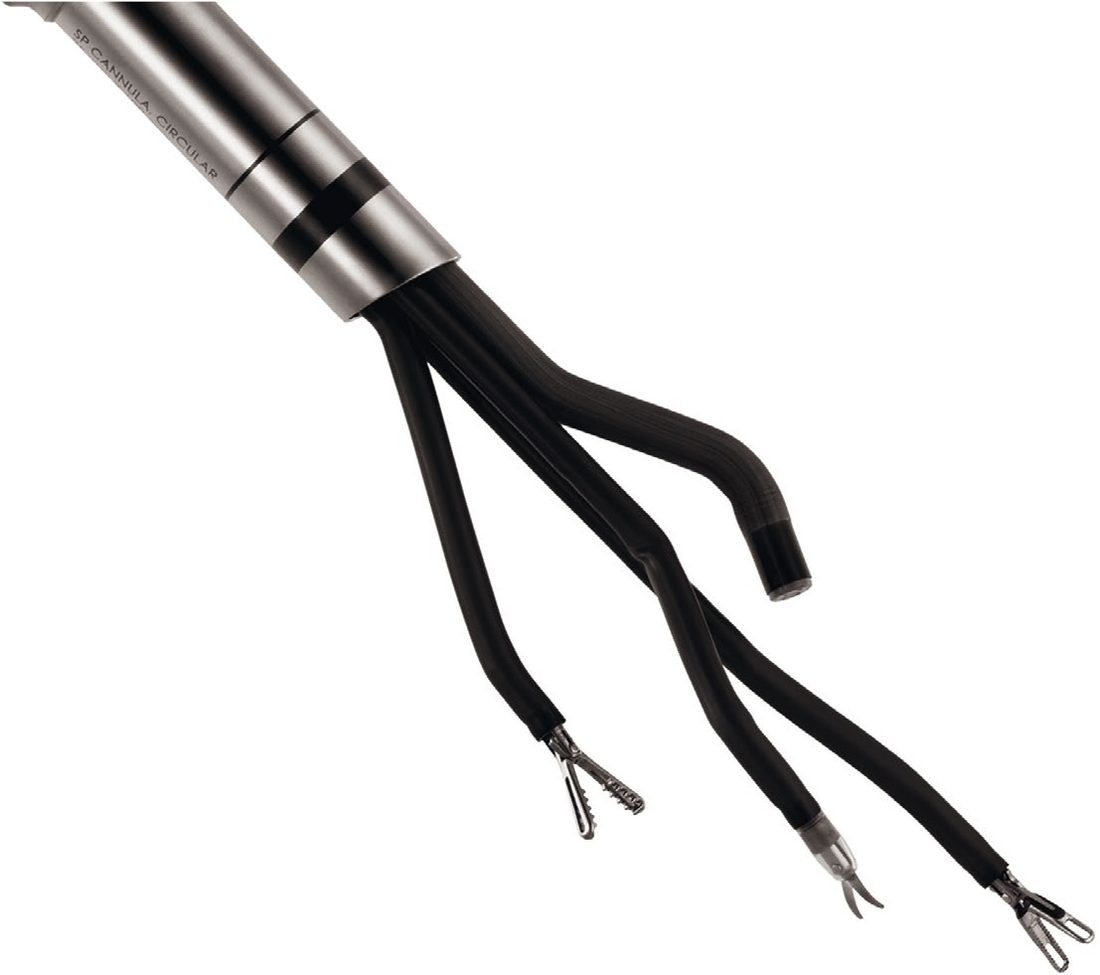
- The da Vinci system, FDA-approved in 2000 (S System), has since been upgraded through the S (2006), Si (2009), and Xi (2014) generations, with a single-port system (da Vinci SP) more recently introduced [1][2].
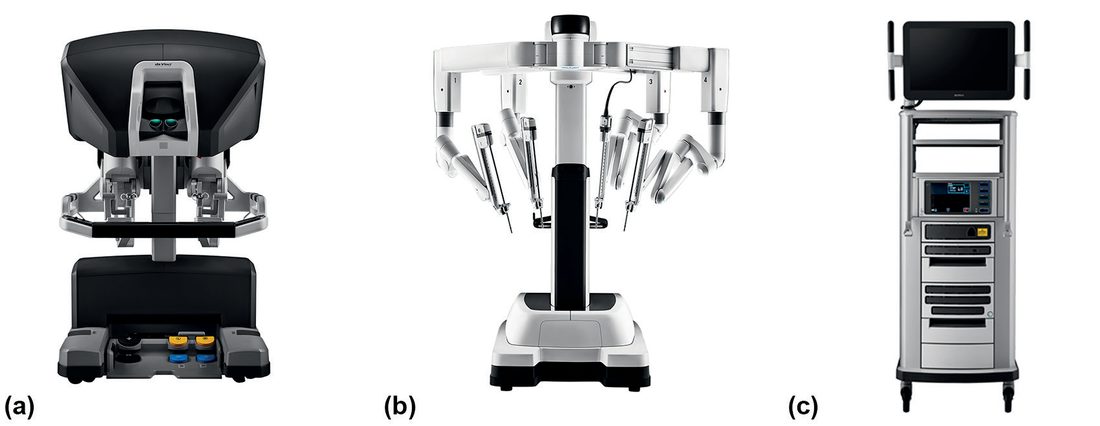
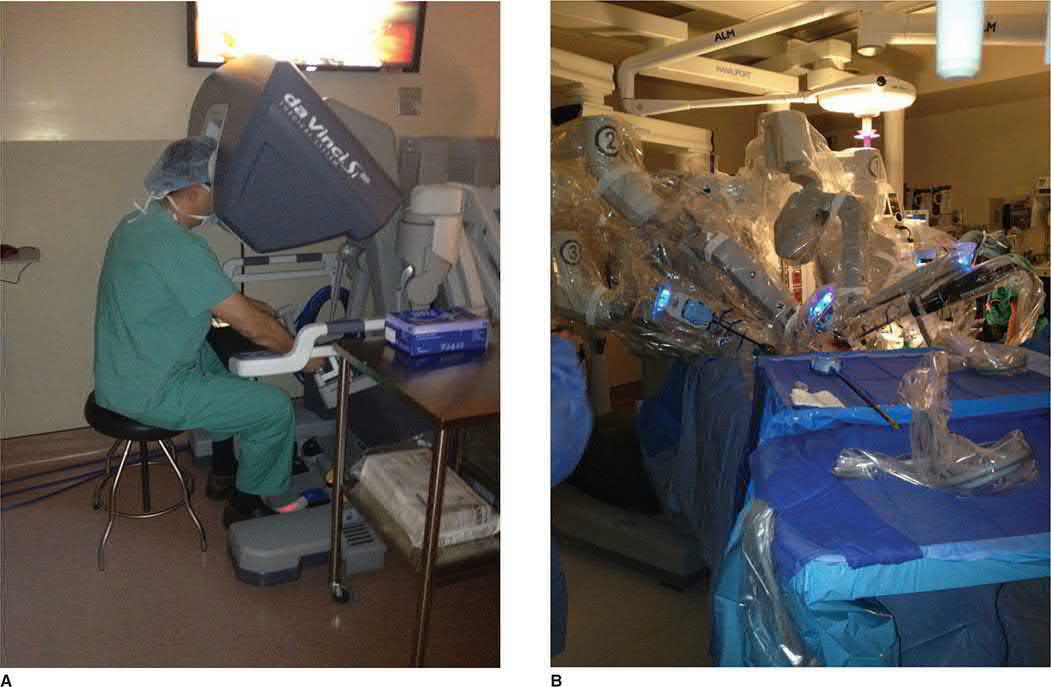
- System design: The da Vinci system comprises a surgeon console and a patient-side cart; trocars and instruments (including the camera) attach to robotic arms on the cart, and the surgeon, seated at the console, controls up to four arms using bilateral hand and foot controls [2].
- An assistant at the bedside exchanges instruments, cleans the camera lens, suctions, and helps create exposure.
- The more complex the operation, the more experienced this bedside assistant should be [2].
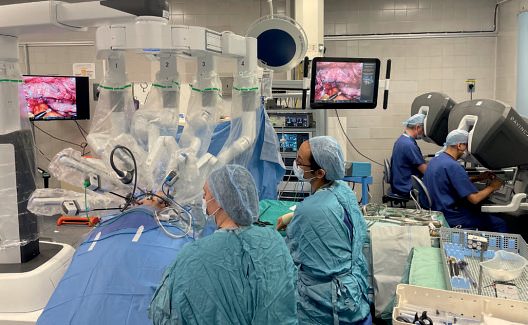
Advantages over open surgery: smaller incisions, less blood loss, shorter hospital stay, decreased pain, decreased surgical site infections, decreased systemic complications, decreased incisional hernia rates, earlier return to daily activities, and improved cosmetic outcome [2].
- Advantages over laparoscopy: For the surgeon, 3D magnified high-definition view (up to 10x magnification, camera angulation up to 30 degrees), control of up to four arms, improved ergonomics (seated console position), a shorter learning curve, and improved accuracy/precision of dissection via EndoWrist instruments offering seven degrees of articulation versus three in the human wrist [1][2].
- For the patient, less intraoperative blood loss and improved procedure-specific short-term outcomes, such as lower oesophageal perforation in Heller myotomy and lower conversion rate in total mesorectal excision (TME) [2].
- Robotic tremor filtering and motion scaling allow large external hand movements to be scaled down to fine internal movements, enhancing precision, and the enclosed console provides isolation from external distractions (at the cost of reduced awareness of team non-verbal communication) [1][2].
- TilePro allows simultaneous multidisplay viewing of intraoperative ultrasound, endoscopy, or preoperative radiology during the procedure [2].
- Disadvantages: Longer operative time, additional training requirements, and higher cost compared with laparoscopy [1][2].
- Consumable costs remain high despite upscaling across specialties, and while robotic surgery can reduce hospital stay versus open surgery, it is difficult to demonstrate a significant length-of-stay or outcome improvement over other minimally invasive alternatives [1].
- One retrospective analysis found that costs of robotic surgery decrease as procedure volume grows at a centre but are unlikely ever to converge with laparoscopic costs [4].
Other platforms: The REVO-I (Meere, Korea, licensed 2017) is a four-arm cart-mounted system with 3D-HD vision via glasses; the Versius (CMR Surgical, CE-marked 2019) uses individual modular cart-mounted arms configured per procedure, mimicking a human arm; the Senhance system (CE-marked 2016) uses independent robotic arms with reusable non-wristed instruments through standard laparoscopic trocars to reduce cost while retaining familiarity with conventional laparoscopy; the Medtronic Hugo RAS system is a lower-cost modular alternative launched in 2019 [1].
- NICE's position on robotic surgery uses a guidance tier that exists precisely for technologies whose evidence is immature: an early value assessment.
- HTG742 covers robot-assisted surgery for soft tissue procedures, and its recommendation is conditional rather than permissive or prohibitive, five named technologies "can be used in the NHS during the evidence generation period", namely the Da Vinci SP, Da Vinci X and Xi, Hugo, Senhance and Versius systems [5].
- They may be used only if the evidence set out in NICE's evidence generation plan is actually being generated, and once they have appropriate regulatory approval including NHS England's Digital Technology Assessment Criteria approval [5].
The conditionality is enforced. Companies must confirm that agreements are in place to generate the evidence and contact NICE annually to confirm it is being generated and analysed as planned, and NICE may revise or withdraw the guidance if those conditions are not met [5]. At the end of a 3-year evidence generation period the companies must submit the evidence in a form usable for decision making, and NICE will then assess whether the technology can be routinely adopted [5].
- One procedure is excluded from the assessment, and the reason is instructive.
- The recommendations do not include robot-assisted prostatectomy, because that is established practice in the NHS and was therefore outside the scope of an early value assessment [5].
- The scope of the uncertainty NICE is describing is thus everything except the one robotic operation that has already been adopted.
- NICE's summary of what the evidence currently shows is deliberately unexcited, and it is the sentence to quote.
- Evidence suggests that robot-assisted surgery for soft tissue procedures is generally comparable with standard minimally invasive surgery for a range of clinical outcomes
- Some evidence shows length of hospital stay is shorter than after open surgery and may be shorter than after some standard minimally invasive procedures [5].
- The claimed benefits NICE does accept are framed as access, system and equality benefits rather than clinical superiority:
| Category | NICE's assessment |
|---|---|
| Access | May increase access to minimally invasive surgery for some procedures and some groups of people |
| System | Some features may make it easier for surgeons to train in minimally invasive surgery; all the technologies let the surgeon sit at a console, which may mean more surgeons can do physically and ergonomically challenging procedures, and may enable surgeons to work for more years |
| Clinical | Generally comparable with standard minimally invasive surgery |
| Equality | Minimally invasive surgery may not be suitable for some groups without robotic assistance, depending on procedure, age and comorbidities |
Table reformats HTG742's stated potential benefits [5].
- The risks NICE names are organisational rather than operative.
- On training, all members of the surgical team must be trained on each robotic system they use, and there is a surgeon and centre learning curve, with patient outcomes and service efficiency not maximised until the end of it [5].
- On cost, early modelling suggests robotic soft tissue surgery could be cost effective in the long term, and is more likely to be cost effective when it replaces open surgery rather than standard laparoscopy, with substantial budgetary costs to introduce a service.
- NICE adds a procurement warning: the guidance will be reviewed after the 3-year evidence generation period and the recommendations may change, so centres should take that into account when negotiating the length of contracts and licence costs [5].
- On equity, NICE records a specific geographical problem.
- Minimally invasive surgery is done less frequently in the most deprived areas of the NHS than the least deprived
- Uptake of robot-assisted surgery has been lower in some parts of England, and most high-volume centres are based in and around London
- The placement of robotic systems and the availability of training and staff could worsen equalities issues, and an NHS England robot-assisted surgery steering group has been assembled to address this [5].
- NHS England and the Getting It Right First Time programme have produced an implementation guide alongside the guidance [5].
The two Californian robots and what the trials showed in Schwartz's account
- The first computer-assisted device drilled femoral shafts for hip prostheses and proved slower than a skilled surgeon; Computer Motion's Aesop (Yulun Wang, Santa Barbara) held and moved the laparoscope by voice, foot or hand and in randomised studies shortened operations, steadied the image and cut scope cleaning, though it has since been eclipsed by passive mechanical arms; Intuitive Surgical's da Vinci grew from Philip Green's master–slave system designed for the space station, bought by Fred Moll and Lonnie Smith, and the Xi of 2014 added HD 3-D vision, a dual console for assistance and teaching and an overhead boom for multiquadrant access [6].
- Two randomised trials of robotic against laparoscopic Nissen fundoplication and a comparison in cholecystectomy found longer operating times and no difference in outcome; success came first with right thoracoscopic mitral valve surgery, then a tidal wave in urology when robotic prostatectomy allowed visualisation and sparing of the erectile nerves and wristed instruments eased the neocystourethrostomy, then female pelvic microsurgery such as tubal reanastomosis, and in general surgery revisional bariatric surgery and complex abdominal wall reconstruction, where closing the defect before mesh and transversus abdominis release are transforming MIS hernia repair; telesurgery has been demonstrated by a New York team removing a gallbladder in France but is rarely used because bedside safety cannot be sacrificed [6].
- Robotic access follows laparoscopic principles with a 12 mm primary port for the stereo scope and 8 mm working ports, arm clashes are commoner on pre-Xi platforms and the bed cannot move once docked without integrated table motion, and robotic single-site platforms may bridge the SILS learning curve; a Fundamentals of Robotic Surgery high-stakes examination is on the horizon [6].
Physiological effects
As with laparoscopy, robotic abdominal procedures depend on pneumoperitoneum and its associated physiological effects (see Laparoscopic Principles), and carbon dioxide insufflation of the chest and abdomen during minimal access approaches (including robotic) may provoke cardiac arrhythmias, so severe chronic obstructive airways disease and ischaemic heart disease may be contraindications [1].
Patient selection
Preoperative assessment focuses on overall fitness (cardiac arrhythmia, lung function), previous surgery/adhesions, body habitus (obesity or a particularly low BMI presents port placement challenges especially with robotic approaches), coagulation status, and thromboprophylaxis needs [1].
Intraoperative imaging
Robotic platforms are therapeutic and operative tools rather than diagnostic modalities, though intraoperative near-infrared fluorescence imaging on the da Vinci platform can delineate lymph nodes, lymphatic drainage, blood vessels, and the biliary tree during a procedure [2].
Skills assessment
- There is a validated instrument, and it is a deliberate extension of the laparoscopic one.
- The Global Evaluative Assessment of Robotic Skills (GEARS) adopted the five domains of the laparoscopic GOALS instrument and added a sixth, "robot control", each rated on a 5-point scale; it has become the most studied and applied performance assessment tool for robotic surgery, with demonstrated success in training applications [7].
- Non-technical skills are assessed separately, most commonly with the 12-item NOTSS instrument or the Oxford NOTECHS programme, the two most studied of 23 surgical non-technical skills training programmes identified in a systematic review of 84 articles [7].
Applications
Robotic general surgical procedures reported for foregut/upper abdominal disease include Heller myotomy, antireflux surgery (e.g., Nissen fundoplication), bariatric surgery (Roux-en-Y gastric bypass, sleeve gastrectomy), radical gastrectomy (subtotal, total, D2 lymphadenectomy), and splenectomy; hepatopancreaticobiliary operations include liver resection, pancreatic resections (pancreaticoduodenectomy, central/distal pancreatectomy, portal vein reconstruction), and cholecystectomy; colorectal operations include right/left colectomy, low anterior resection, abdominoperineal resection, and total mesorectal excision; other procedures include inguinal, ventral incisional, and hiatal hernia repair and thyroidectomy [2].
Robotic Heller myotomy: the robotic platform enables precise dissection of the oesophageal muscle layers; laparoscopic Heller myotomy carries a 5-10% oesophageal perforation rate, whereas robotic series report 0% perforation (e.g., 104 patients in one series; a multi-institutional comparison found 0% robotic versus 16% laparoscopic perforation), attributed to enhanced visualisation and instrument control, with operative times converging to laparoscopic levels with increasing experience [2].
Robotic gastrectomy with D2 lymphadenectomy: open/laparoscopic D2 lymphadenectomy for gastric cancer requires fine dissection around the hepatoduodenal ligament, coeliac axis, and splenic vessels, with a laparoscopic learning curve plateauing over 50 cases; the robotic platform's four-arm control (steady camera, independent retraction arm, two articulating working arms) and superior visualisation are proposed to shorten this learning curve [2].
Robotic total mesorectal excision (TME) / proctectomy: EndoWrist articulation facilitates dissection and suturing in the narrow male pelvis, an area technically difficult with laparoscopy; nonrandomized case-control studies found a decreased conversion-to-open rate with robotic-assisted proctectomy compared with laparoscopic, with similar overall outcomes [2][8].
Robotic inguinal hernia repair: retrospective data comparing robotic-assisted to laparoscopic repair have been mixed, with some studies showing longer operative time and higher cost; a single-institution retrospective study found reduced complication rates with robotic-assisted repair compared with open repair in obese patients (10.8% vs 3.2%, matched for preoperative risk); single-surgeon survey data suggest excellent long-term (36-month) quality-of-life outcomes after robotic-assisted TAPP repair [4].
Robotic prostatectomy (urology) is, to date, the only operation demonstrated to have better outcomes with the robotic approach compared with laparoscopic or open techniques, attributed to improved visualisation and preservation of the pelvic nerves responsible for erectile function [9].
- Three architectures, only one of which is in general use.
- Robotic surgical systems are classified as active (the platform works autonomously under the operating surgeon's supervision, performing preprogrammed tasks), semiactive (surgeon-driven elements complete preprogrammed tasks), and master-slave (no preprogrammed or autonomous elements at all, wholly dependent on surgeon activity, translating hand movements to the instruments) [3].
- The master-slave design is now by far the most used.
- The first active system used in humans was the PROBOT, adopted by urologists in 1988 for transurethral resection of the prostate [3].
- The concept originated in military and NASA-funded research at the NASA Ames Research Center and Stanford in the mid-1980s, its early appeal to the military being the prospect of treating wounded soldiers on the battlefield while keeping the surgeon safe [3].
- Adoption did not follow the intended path.
- The initial system was intended for cardiac surgery and, despite encouraging early results, gained limited acceptance.
- Urologists instead popularised it for prostatectomy, and as many as 85% of all radical prostatectomies are now performed robotically [3].
- Gynaecology followed, given the advantage of operating deep in the pelvis, and general surgeons followed once multiquadrant operating became practical.
- Over 11 million robotic procedures had been performed and over 66,000 surgeons trained on the da Vinci system as of December 2022 [3].
The candid summary of the evidence is that the robot beats open surgery and has struggled to beat laparoscopy. Numerous studies show the expected minimal-access benefits over open procedures, decreased postoperative pain, decreased blood loss, shorter stay and faster recovery, and ongoing investigation has supported robotic treatment of malignant disease; but superiority over laparoscopy has been difficult to demonstrate, and longer operative times and higher cost pose a challenge, alongside limited access and lack of training [3].
- Regulatory caution is part of the picture.
- In 2019 the FDA issued a statement warning against the use of robot-assisted surgical devices in mastectomy and other cancer-related surgery, following a randomised trial describing decreased long-term survival after robotic hysterectomy for cervical cancer and citing a lack of data on robotic use in cancer prevention or treatment.
- A second warning specifically against robotic mastectomy followed in 2021 [3].
Procedure by procedure, the trial evidence is uneven, and it is worth knowing which way each named trial fell.
| Operation | Trial or dataset | Result |
|---|---|---|
| Ventral hernia | PROVE-IT randomised trial | Longer median operative time (146 vs 94 minutes) and higher cost, no difference in pain, stay, same-day discharge, opioid use or complications |
| Ventral hernia | Multicentre randomised trial, 2-year follow-up | No difference at 90 days, but higher recurrence in the laparoscopic arm at 2 years |
| Inguinal hernia | RIVAL randomised trial | No significant difference in clinical outcomes; robotic arm had longer operative time, higher cost and higher surgeon frustration |
| Rectal cancer | ROLARR randomised trial | No significant difference in conversion to open, operative time, positive margins, stay, or 30-day morbidity or mortality |
| Rectal cancer | COLRAR randomised trial | No significant improvement in TME quality; on subanalysis a lower positive circumferential margin rate (0% vs 6.1%), but terminated early for poor accrual |
| Right colon cancer | South Korean randomised trial | No difference in 5-year disease-free recurrence or survival; longer operative time (195 vs 129 minutes) and higher cost |
| Distal gastrectomy | Randomised trial | Faster recovery, lower morbidity (9.2% vs 17.6%), more nodes examined, earlier start of adjuvant chemotherapy |
Table summarises the named comparative trials [3]. Long-term oncological outcomes were not examined in the gastrectomy trials and should be interpreted with caution [3].
- Where the robot has the clearest structural argument is the pelvis, and the argument is about the learning curve rather than the outcome.
- Laparoscopic total mesorectal excision is feasible but technically difficult, with a learning curve upward of 150 cases, whereas robotic TME allows fine pelvic dissection with a learning curve as low as 25 cases [3].
- A multicentre randomised trial of 1240 patients from China was the first to report advantages of robotic over laparoscopic TME on both oncological and postoperative outcomes: lower positive resection margin rate (4% vs 7.2%), higher macroscopic complete resection (95.4% vs 91.8%), fewer complications, fewer conversions, and shorter stay [3].
- Adoption rates vary widely by specialty area.
- Statewide data from Michigan showed robotic inguinal hernia repair rising from 0.7% in 2012 to 28.8% in 2018, whereas fewer than 12% of primary bariatric operations were performed robotically in 2021, and fewer than 15% of pancreatic operations in the United States are done by any minimally invasive approach, mainly because of the difficulty of vascular control and high open conversion rates [3].
- As of 2024 no randomised trials compared robotic bariatric surgery with laparoscopic or open approaches.
- Large registry review of 571,417 patients found robotic gastric bypass associated with decreased bleeding and fewer complications, but robotic sleeve gastrectomy associated with a higher leak rate and higher readmission and reintervention rates [3].
The UK colorectal position is more reserved than the enthusiasm elsewhere. Robotics using the da Vinci system is gaining popularity in colorectal surgery and allows 3D vision and better dexterity through increased rotation and angulation of the instruments, which is particularly significant in pelvic surgery such as anterior resection. There are, however, cost implications, and no clear patient outcome benefit has yet been seen over standard laparoscopic surgery [10].
Complications
- Robotic surgery shares the general complications of minimal access surgery associated with pneumoperitoneum and access (see Laparoscopic Principles) [11].
- Specific disadvantages that translate into risk include longer operative time (itself associated with increased venous thromboembolism and respiratory/wound complication risk) and the learning curve required to achieve competence [1][2].
- The robotic team must carefully rehearse protocols for both controlled and uncontrolled conversion to open surgery in the event of an emergency, given the physical separation of the surgeon from the patient at the console [1].
- Reduced awareness of non-verbal communication from the enclosed console system is a recognised limitation requiring team training and regular verbal cues [1].
Loss of tactile feedback
- Minimal access surgery is associated with some loss of tactile feedback, and the loss is greater with robotic procedures than with straight-stick endoscopy [1].
- This is an area of ongoing research in haptics and biofeedback systems [1].
- Rather than reproducing touch, endoscopic and laparoscopic ultrasonography substitute a visual representation of structures that in open surgery would rely on palpation for localisation and appraisal [1].
- The lack of tactile feedback is listed alongside size and cost as the standing disadvantage of the da Vinci platform, set against improved ergonomics, tremor filtering, motion scaling, a stable visual platform and wrist-like instrument articulation [2].
- Surgeons transitioning to the robotic platform describe the adaptation as replacing touch with "feeling" through the visual cortical pathway, and report "robot fatigue" (headaches and psychological stress) after several hours at the console, which one unit managed by splitting cases so that one surgeon performed the resection and the other the reconstruction [3].
Outcomes
- Robotic gastrointestinal operations demonstrate safety and feasibility with minimally invasive benefits comparable to or exceeding laparoscopy in specific procedures, though robotic surgery "has not yet demonstrated any substantial improvement in clinical outcomes when compared to laparoscopy in general" [2].
- Early studies suggest equivalence between robotic and laparoscopic/hand-assisted laparoscopic resections for colorectal disease, though long-term oncologic superiority has not been established, and laparoscopic/robotic TME for rectal cancer may not always be appropriate [9].
- Robotic prostatectomy remains the only operation with demonstrated superior outcomes over laparoscopic or open approaches [9].
References
- Bailey & Love's Short Practice of Surgery, 28th ed., Ch. 10
- Maingot's Abdominal Operations, 13th ed., Ch. 8
- Sabiston Textbook of Surgery, 22nd ed., Ch. 10
- Schwartz's Principles of Surgery: ABSITE and Board Review, Ch. 37
- NICE HealthTech Guidance HTG742: Robot-assisted surgery for soft tissue procedures — early value assessment (2025), 1; 1.1; 1.2; 1.3 www.nice.org.uk
- Schwartz's Principles of Surgery, 11th ed., Ch. 14, Minimally Invasive Surgery, Robotics, NOTES, and SILS
- Sabiston Textbook of Surgery, 22nd ed., Ch. 2
- Schwartz's Principles of Surgery: ABSITE and Board Review, Ch. 29 Colon, Rectum, and Anus
- Schwartz's Principles of Surgery: ABSITE and Board Review, Ch. 14
- Oxford Handbook of Clinical Surgery, 5th ed., Ch. 12
- Bailey & Love's Short Practice of Surgery, 28th ed., Ch. 7; Ch. 10