



Ulcerative Colitis
Summary
- Ulcerative colitis is a chronic, relapsing-and-remitting inflammatory bowel disease confined to the large intestine, characterised by continuous mucosal inflammation that always involves the rectum and extends proximally to a variable degree [1].
- Around 5% of patients present with acute severe (fulminant) colitis, a medical and surgical emergency [1].
- Medical therapy aims for clinical and endoscopic remission; roughly 20% of patients require colectomy over their lifetime [1].
NICE NG130 organises ulcerative colitis management by disease extent (proctitis, proctosigmoiditis and left-sided disease, extensive disease) rather than by drug class, and each extent has a different first-line treatment [2]. Two features are worth noting before the detail: NICE gives a 72-hour decision point in acute severe colitis and requires the likelihood of needing surgery to be assessed and documented on admission and then daily [2]; and it devotes an entire section to information for people considering surgery, specifying who must give it and what it must cover [2].
Definition
Ulcerative colitis is a chronic inflammatory bowel disease characterised by mucosal inflammation of the large bowel, always involving the rectum (proctitis) and extending to a variable degree of more proximal colon (colitis); when the entire colon and rectum are involved this is termed pancolitis [1].
Pathophysiology
- Ulcerative colitis is a mucosal, not transmural, inflammatory process.
- Histological hallmarks include crypt atrophy and distortion, irregular mucosal villi, basal plasmacytosis and mucus depletion, though none is individually pathognomonic, diagnosis rests on clinical correlation, disease course and exclusion of infection [1].
- Pseudopolyposis occurs in almost a quarter of cases; stricturing is unusual, unlike Crohn's disease, and should prompt urgent evaluation for coexisting carcinoma [1].
- Half of patients with disease initially confined to the rectum or rectosigmoid go on to develop more proximal disease over time [1].
- Increased gut mucosal permeability develops early, with increased luminal antigen passage driving a cell-mediated inflammatory response [1].
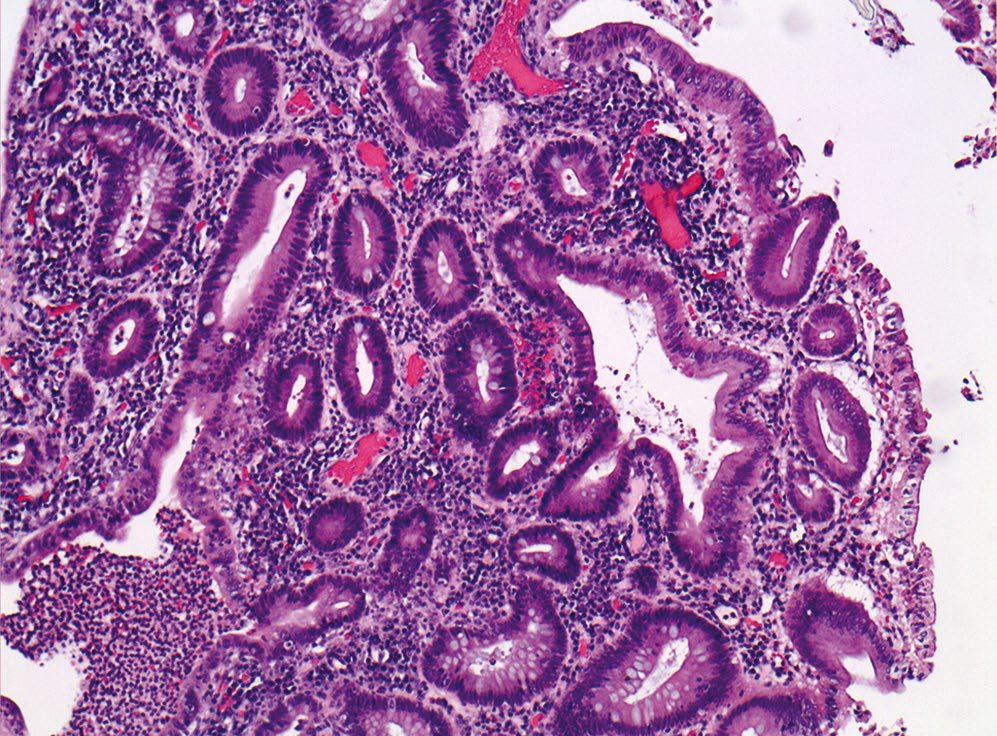
Genetics, microbiome and the mucosal lesion in Schwartz's account
- IBD is polygenic: ulcerative colitis is linked to at least 20 loci on genome-wide association studies but has a weaker genetic component than Crohn's disease, 10–30% of patients have another affected family member, and concordance is 50% in monozygotic and 10% in dizygotic twins [4].
- The most consistently associated variants involve innate immunity, NOD2 on chromosome 16, most strongly tied to Crohn's but also to severe pouchitis after colectomy for ulcerative colitis, ATG16L1 on chromosome 2 (response to bacterial muramyl dipeptide) and IRGM on chromosome 5 (interferon-γ-mediated clearance of intracellular pathogens, variants of which predict more ileocolic resections in Crohn's), and the prevailing model is chronic immune dysregulation reacting pathologically to microbes present in healthy guts too, with a defective mucosal barrier and an autoimmune mechanism (suggested by the rheumatological character of the extraintestinal manifestations) also postulated [4].
- Microbiome studies show Serratia marcescens, E. coli and Candida tropicalis enriched in Crohn's disease, and in 543 stool samples patients with ulcerative colitis and primary sclerosing cholangitis had a distinct community enriched for Veillonella, a genus associated with inflammatory and fibrotic diseases [4].
- Ulcerative colitis is a mucosal process infiltrating mucosa and submucosa with inflammatory cells, atrophic mucosa and frequent crypt abscesses, friable mucosa with inflammatory pseudopolyps at endoscopy, a foreshortened scarred colon in long-standing disease, and a colon that may look normal endoscopically and microscopically when quiescent; it is classified by extent as proctitis, proctosigmoiditis, left-sided colitis or pancolitis extending beyond the splenic flexure, its involvement of rectum and colon is continuous (rectal sparing or skip lesions suggest Crohn's) and because inflammation is purely mucosal, strictures are highly uncommon and any stricture must be presumed malignant until proved otherwise [4].
Clinical features
Symptoms depend on disease extent [1][5]:
- Proctitis: the commonest presentation; urgency and frequency due to rectal irritability, with bloody mucus mixed with loose stool (frank bloody diarrhoea is rare).
- Left-sided colitis (to the splenic flexure): rectal irritation plus extensive bloody mucus, often bloody diarrhoea, with mild systemic features.
- Pancolitis: diarrhoea predominates, with common systemic features (fever, malaise, anorexia, tachycardia), possible "backwash ileitis," anaemia, hypoalbuminaemia and hypokalaemia.
- Pain is unusual in ulcerative colitis generally, but abdominal pain, distension and impaired growth in children may occur with extensive disease.
Extraintestinal manifestations
Extraintestinal manifestations occur in around 15% and include arthritis (an asymmetrical large-joint polyarthropathy), sacroiliitis and ankylosing spondylitis (20 times more common than in the general population, HLA-B27-associated), primary sclerosing cholangitis (which can progress to cirrhosis and is a risk factor for cholangiocarcinoma and for colorectal neoplasia independent of colectomy), erythema nodosum, pyoderma gangrenosum, uveitis and episcleritis [1].
Extraintestinal manifestations in Schwartz's figures
- Fatty infiltration of the liver is present in 40–50% of IBD patients and cirrhosis in 2–5%; fatty change may reverse with treatment of the colitis but cirrhosis does not, 40–60% of patients with primary sclerosing cholangitis have ulcerative colitis, colectomy does not reverse the cholangitis and transplantation is the only effective therapy, pericholangitis is diagnosed on liver biopsy, and bile-duct carcinoma is a rare complication arising on average 20 years younger than in other patients [4].
- Arthritis is 20 times commoner than in the general population and improves with treatment of the colitis, whereas sacroiliitis and ankylosing spondylitis are unaffected by medical or surgical treatment of the bowel [4].
- Erythema nodosum affects 5–15%, women three to four times as often as men, tracks disease activity and produces raised red lesions mainly on the lower legs; pyoderma gangrenosum, almost exclusive to IBD, begins as a pretibial (or peristomal) plaque, papule or bleb that ulcerates into a painful necrotic wound, responds to bowel resection in some patients and not others, and exhibits pathergy (surgical sites provoke and worsen it) so a history or presence of pyoderma should prompt consideration of avoiding a stoma [4].
- Up to 10% develop ocular lesions, uveitis, iritis, episcleritis, conjunctivitis and congenital hypertrophy of the retinal pigment epithelium, usually during an acute exacerbation [4].
- Massive haemorrhage is rare although anaemia is common, and 15% of IBD colitis cannot be classified as ulcerative or Crohn's colitis grossly or microscopically (indeterminate colitis), presenting like ulcerative colitis with mixed endoscopic and pathological features [4].
Etiology
The precise aetiology is unknown but reflects genetic predisposition combined with environmental triggers, often an apparent acute gastrointestinal infection; peak diagnosis is in the late teens and twenties, though it may present in later life, and it is commonest in white populations [5]. Incidence and prevalence of inflammatory bowel disease overall are highest in Europe and North America (around 3 per 1,000), rising worldwide with improved hygiene, dietary change and industrialisation [1]. Unlike Crohn's disease, smoking tends to suppress ulcerative colitis symptoms [3].
Diagnosis
- Basic bloods show raised WCC and CRP and low Hb and albumin during flares.
- Stool should be sent for microbiology (particularly Campylobacter, which can closely mimic acute severe ulcerative colitis) and Clostridioides difficile toxin; cytomegalovirus should be considered in immunocompromised patients, as it can precipitate fulminant colitis [1].
- Rigid or flexible sigmoidoscopy shows hyperaemic, friable mucosa with mucopurulent exudate; colonoscopy with biopsy establishes extent, distinguishes ulcerative colitis from Crohn's colitis, monitors treatment response, and screens longstanding disease for dysplasia, though colonoscopy is contraindicated in severe acute colitis because of perforation risk [1][5].
- Plain abdominal radiograph can demonstrate colonic dilatation [1].
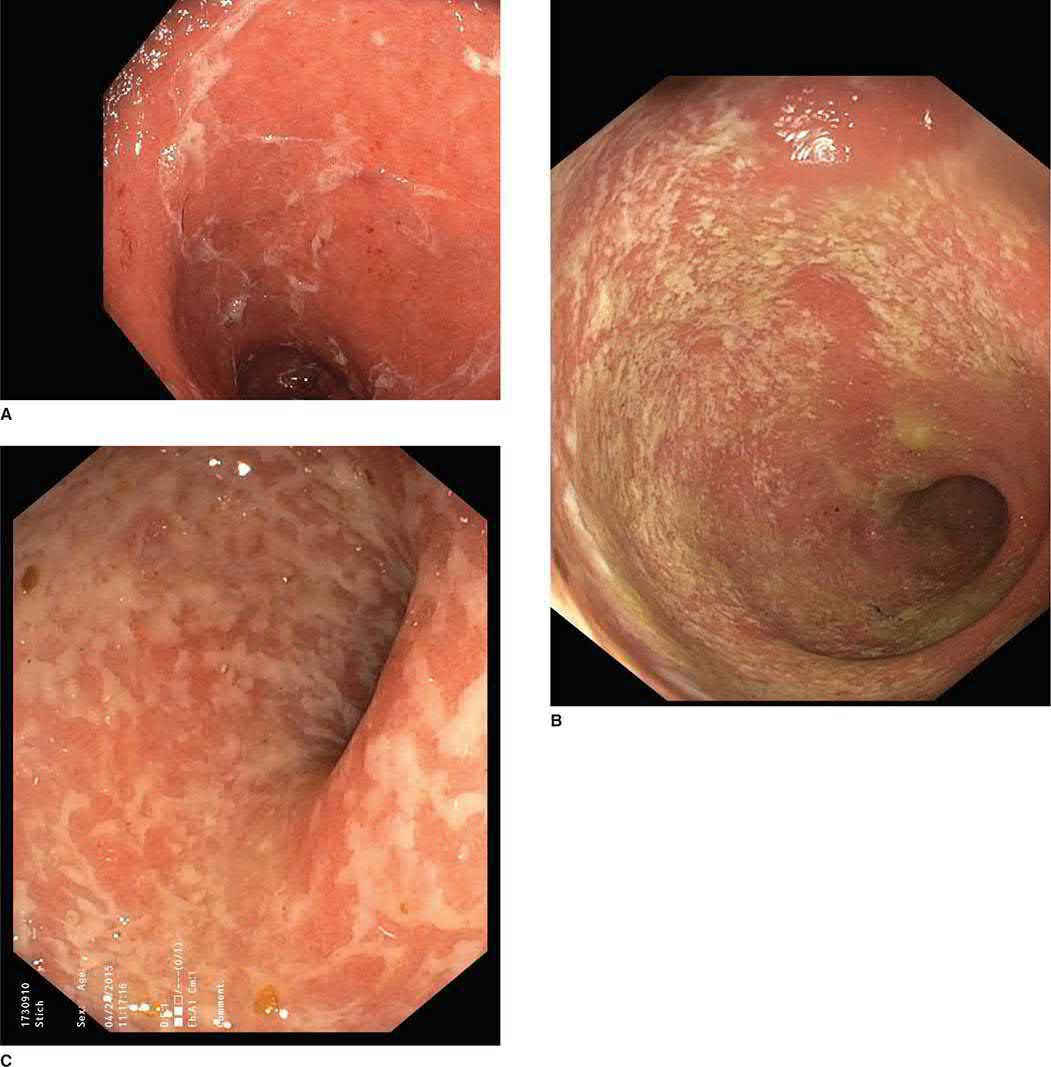
Endoscopy, its contraindication in the acute flare, and surveillance
- Because the rectum is invariably involved, proctoscopy may suffice for diagnosis; the earliest sign is mucosal oedema with loss of the vascular pattern, then friability and ulceration with pus and mucus, biopsy is diagnostic in chronic disease but shows only non-specific inflammation acutely, and colonoscopy or barium enema during an acute flare is contraindicated for risk of perforation [4].
- Barium enema, less sensitive than colonoscopy and liable to miss early disease, shows the foreshortened haustra-less "lead-pipe" colon of long-standing disease; ASCA and pANCA may help separate ulcerative colitis from Crohn's but need prospective study, and infectious colitides, CMV, Campylobacter jejuni, Entamoeba histolytica, toxigenic E. coli, C. difficile, Neisseria gonorrhoeae, Salmonella and Shigella, must be excluded [4].
- Cancer risk rises with pancolitis and duration (about 2% at 10 years, 8% at 20 and 18% at 30) and because colitis-associated cancer arises in flat dysplasia and is hard to detect early, surveillance colonoscopy with 40–50 random biopsies is recommended annually after 8 years of pancolitis and after 15 years of left-sided colitis, magnifying chromoendoscopy with Lugol's iodine, methylene blue or indigo carmine improving targeting of dysplastic epithelium [4].
- Invasive cancer may be present in up to 20% of patients with low-grade dysplasia, so any dysplasia is an indication for proctocolectomy; prophylactic proctocolectomy after 10 years without dysplasia remains controversial, surveillance samples only a small fraction of the mucosa and misses lesions, but progression to carcinoma is only about 2.4% when all biopsies lack dysplasia, and neither approach has been shown to reduce cancer mortality [4].
Scoring and Severity
The Truelove and Witts criteria classify severity by stool frequency and systemic signs [1]:
| Grade | Features |
|---|---|
| Mild | Fewer than 4 stools per day, with or without blood, no systemic toxicity |
| Moderate | More than 4 stools per day with minimal systemic illness, possible mild anaemia and abdominal pain, raised ESR and CRP |
| Severe | More than 6 bloody stools per day with systemic illness, fever, tachycardia, anaemia, raised inflammatory markers, often hypoalbuminaemia |
| Fulminant | More than 10 bowel movements per day, fever, tachycardia, continuous bleeding, anaemia, hypoalbuminaemia, abdominal tenderness and distension, transfusion requirement, and in the worst cases progressive toxic megacolon, an indication for emergency surgery |
Table reformats the Truelove and Witts severity grades [1].
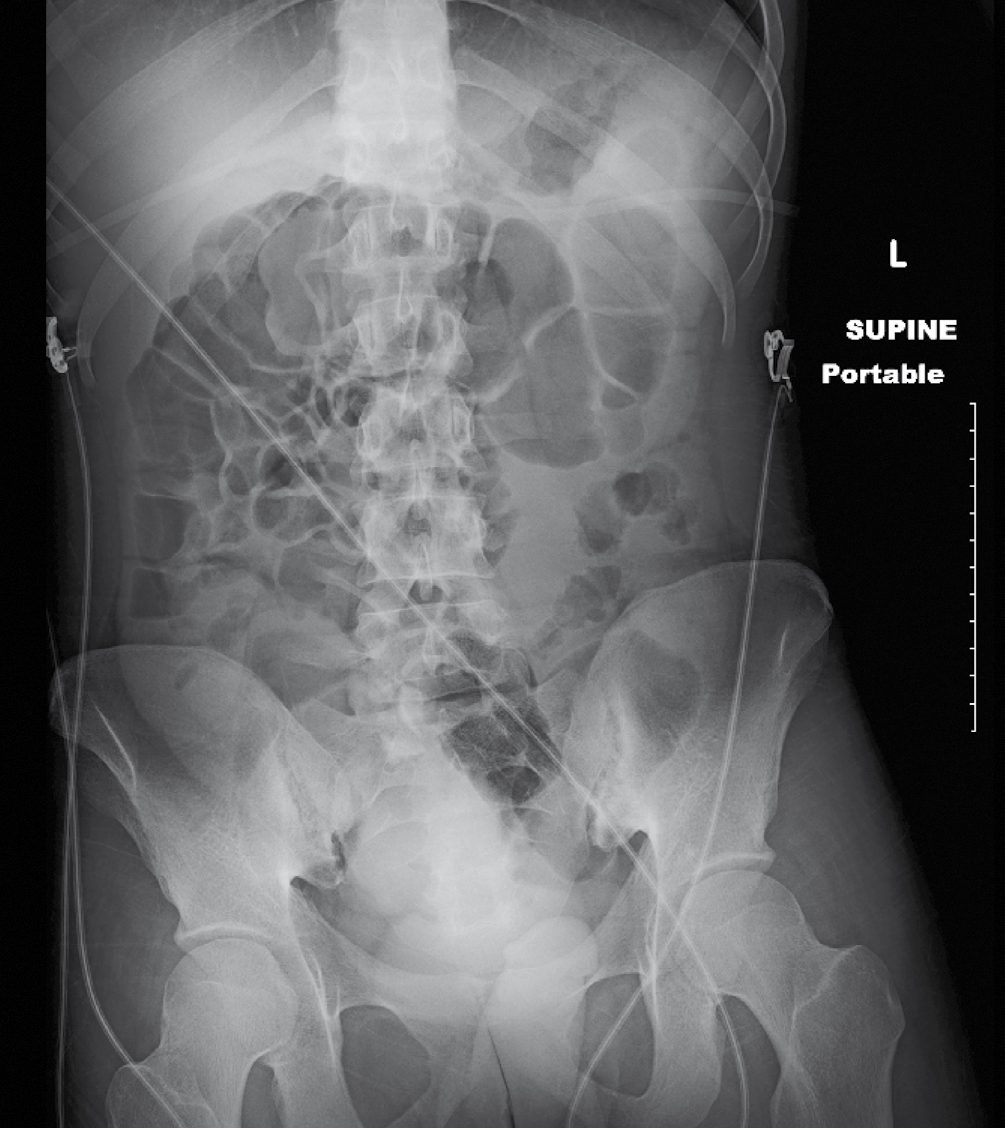
- The Mayo score combines stool frequency, rectal bleeding, endoscopic findings on flexible sigmoidoscopy and global physician assessment, each scored 0–3, to grade disease activity and monitor treatment response [1].
- Toxic dilatation or megacolon is defined radiologically as a colonic diameter greater than 5.5–6 cm [1][7].
- Cancer risk rises with disease duration: approximately 1% at 10 years, 10–15% at 20 years, and 20% at 30 years from diagnosis, so patients with pancolitis of more than 10 years' duration enter endoscopic surveillance programmes [1].
NICE gives a separate, prognostic list of features that predict the need for surgery, distinct from the severity scores. Be aware that there may be an increased likelihood of needing surgery for people with any of the following [2]:
| Feature | Threshold |
|---|---|
| Stool frequency | More than 8 per day |
| Pyrexia | Present |
| Tachycardia | Present |
| Abdominal X-ray | Colonic dilatation |
| Bloods | Low albumin, low haemoglobin, high platelet count, or CRP above 45 mg/litre |
Table reformats the features predicting need for surgery [2]. Normal values may differ in pregnant women [2]. Critically, this assessment is not a one-off: assess and document on admission, and then daily, the likelihood of needing surgery for people admitted with acute severe ulcerative colitis [2].
- Longstanding colitis earns a surveillance colonoscopy programme, and NICE sets both who enters it and how often they are scoped.
- Offer colonoscopic surveillance to people with inflammatory bowel disease whose symptoms started 10 years ago and who have either ulcerative colitis (but not proctitis alone), or Crohn's colitis involving more than one segment of colon [8].
- Proctitis alone is the exclusion worth remembering.
Entry to the programme begins with a baseline scope that is not a plain white-light examination. Offer a baseline colonoscopy with chromoscopy and targeted biopsy of any abnormal areas to determine the person's risk of developing colorectal cancer [8].
That baseline sorts the patient into one of three risk groups, defined at the last complete colonoscopy [8]:
- Low risk, extensive but quiescent ulcerative or Crohn's colitis, or left-sided ulcerative colitis (not proctitis alone) or Crohn's colitis of similar extent
- Intermediate risk, extensive colitis with mild active inflammation confirmed endoscopically or histologically, post-inflammatory polyps, or a first-degree relative with colorectal cancer aged 50 or over
- High risk, extensive colitis with moderate or severe active inflammation confirmed endoscopically or histologically, primary sclerosing cholangitis (including after liver transplant), a colonic stricture in the past 5 years, any grade of dysplasia in the past 5 years, or a first-degree relative with colorectal cancer aged under 50
The interval follows directly from the group: low risk, colonoscopy at 5 years; intermediate risk, 3 years; high risk, 1 year [8]. Note that PSC puts a patient straight into annual surveillance regardless of how quiet the colitis looks.
Treatment and Management
Care is delivered by a multidisciplinary IBD team (gastroenterology, colorectal surgery, IBD nursing, stoma therapy, radiology, pathology, dietetics) [1]. First-line treatment is 5-aminosalicylic acid, topical or systemic, useful in proctitis and in maintenance; corticosteroids, topical or systemic, provide prompt symptom relief for flares but are not for long-term maintenance; azathioprine, 6-mercaptopurine and ciclosporin provide steroid-sparing maintenance, with TPMT testing recommended before thiopurines since around 10% have deficient activity; anti-TNFα antibodies (infliximab, adalimumab), ustekinumab, vedolizumab, etrolizumab, tofacitinib and ozanimod are used for moderate-to-severe or refractory disease [1][5].
Acute severe colitis requires admission, regular vital-sign and abdominal review, stool charting, and intravenous hydrocortisone as first-line; intravenous ciclosporin or anti-TNFα rescue therapy is considered if there is no rapid improvement, with clinical deterioration mandating urgent colectomy [1][7]. Correction of anaemia, electrolyte derangement and nutritional support, often parenteral, is essential; steroids may mask signs of impending perforation [1].
Indications for surgery: severe or fulminating disease unresponsive to medical therapy; chronic disease with anaemia, frequent stools, urgency and tenesmus; steroid dependency or intolerable side effects; growth retardation in children; high-grade dysplasia or carcinoma; associated sclerosing cholangitis; extraintestinal manifestations; and rarely severe haemorrhage or obstructive stenosis [1].
Inducing remission in mild-to-moderate disease depends entirely on extent, and topical treatment is first-line for everything except extensive disease, where it is combined.
| Extent | First line | If no remission at 4 weeks | If further treatment needed |
|---|---|---|---|
| Proctitis | Topical aminosalicylate | Consider adding an oral aminosalicylate | Consider adding a time-limited course of topical or oral corticosteroid |
| Proctosigmoiditis and left-sided colitis | Topical aminosalicylate | Consider adding a high-dose oral aminosalicylate, or switching to a high-dose oral aminosalicylate plus a time-limited topical corticosteroid | Stop topical treatments and offer an oral aminosalicylate with a time-limited oral corticosteroid |
| Extensive disease | Topical aminosalicylate and high-dose oral aminosalicylate | Stop the topical aminosalicylate and offer high-dose oral aminosalicylate with a time-limited oral corticosteroid | Not stated separately |
Table reformats the extent-based induction pathway [2].
Where a person declines topical treatment, an oral aminosalicylate may be considered instead with an explanation that it is not as effective as a topical aminosalicylate; where they cannot tolerate aminosalicylates at all, consider a time-limited course of a topical or oral corticosteroid [2]. Where several suitable medicines exist, the least expensive should be used after discussing the advantages and disadvantages of all options, taking administration costs, dosages, price per dose and commercial arrangements into account [2].
Acute severe ulcerative colitis is a two-step algorithm with an explicit 72-hour gate. For people admitted to hospital, ensure that a gastroenterologist and a colorectal surgeon collaborate to provide treatment and management, with a team composition appropriate to the person's age, paediatric gastroenterology advice for a child or young person, and the obstetric and gynaecology team included for a pregnant woman [2].
- Step 1: offer intravenous corticosteroids to induce remission, and assess the likelihood that the person will need surgery. Consider intravenous ciclosporin or surgery for people who cannot tolerate, decline, or have contraindications to intravenous corticosteroids [2].
- Step 2: consider adding intravenous ciclosporin to intravenous corticosteroids, or consider surgery, for people who have little or no improvement within 72 hours of starting intravenous corticosteroids, or whose symptoms worsen at any time despite corticosteroid treatment [2].
- Infliximab is recommended only where ciclosporin is contraindicated or clinically inappropriate, based on a careful individual assessment of risks and benefits [2].
Note that in May 2019 the use of ciclosporin in these recommendations was off-label [2].
- Maintaining remission.
- After a mild-to-moderate exacerbation of proctitis or proctosigmoiditis, consider a topical aminosalicylate alone (daily or intermittent), an oral plus a topical aminosalicylate, or an oral aminosalicylate alone, explaining that oral alone may not be as effective as combined treatment or as an intermittent topical aminosalicylate alone [2].
- After a mild-to-moderate exacerbation of left-sided or extensive disease in adults, offer a low maintenance dose of an oral aminosalicylate [2]. Consider oral azathioprine or mercaptopurine to maintain remission after 2 or more exacerbations in 12 months requiring systemic corticosteroids, or if remission is not maintained by aminosalicylates, and also after a single episode of acute severe colitis [2].
Medical therapy as Schwartz sets it out
- Salicylates (sulfasalazine, 5-ASA/mesalamine) are first-line for mild to moderate disease, inhibiting cyclo-oxygenase and 5-lipoxygenase in the mucosa on direct contact, with formulations targeting different sites and suppositories and enemas extremely effective for proctitis and proctosigmoiditis, which rarely need systemic therapy; antibiotics are not used in ulcerative colitis outside fulminant colitis or toxic megacolon [4].
- Corticosteroids, oral or parenteral, improve 75–90% of acute exacerbations but must be limited to the shortest course, used cautiously in children for growth, and failure to wean is a relative indication for surgery; budesonide, beclomethasone dipropionate and tixocortol pivalate undergo rapid hepatic degradation for less systemic toxicity, and steroid enemas suit distal disease [4].
- Azathioprine and 6-mercaptopurine serve salicylate failure and steroid dependence or refractoriness but take 6–12 weeks to act, so steroids are almost always continued meanwhile; ciclosporin improves up to 80% of acute flares though most still come to colectomy, works within 2 weeks, and is limited by nephrotoxicity, hirsutism and gum hypertrophy; methotrexate is of unproven efficacy though more than half of patients reportedly improve [4].
- Biologics divide surgeons and gastroenterologists more in ulcerative colitis than in Crohn's, because the putative surgical cure recasts the risks of long-term immunosuppression; infliximab (UC SUCCESS) and adalimumab (ULTRA I and II) are supported for moderate-to-severe disease failing other therapy, inpatient infliximab rescue for severe steroid-dependent colitis is of uncertain value as a bridge to elective surgery because the studies rarely focused on pancolitis, the group most likely to fail rescue and need colectomy, and whether preoperative biologics raise postoperative complications is contested, some studies of ileocolectomy for Crohn's after infliximab within 3 months found more sepsis, abscess and readmission, most complications being infectious [4].
- Malnutrition from reduced intake, protein-losing diarrhoea and catabolism is common, parenteral nutrition should be considered early, albumin, prealbumin and transferrin are assessed before operation, and in the extremely malnourished, especially on steroids, a stoma is often safer than an anastomosis [4].
- Fulminant colitis is treated with bowel rest, hydration, broad-spectrum antibiotics and parenteral steroids, avoiding colonoscopy, barium enema and antidiarrhoeals, and deterioration or failure to improve within 24–48 hours mandates surgery [4].
Surgeries
- Emergency subtotal colectomy and end-ileostomy: the safest procedure in acute severe colitis or in malnourished or high-dose-steroid patients, leaving the rectosigmoid remnant as a mucous fistula or closed rectal stump; it avoids pelvic dissection in an unwell patient and allows histology to distinguish ulcerative colitis from Crohn's disease, with restorative surgery deferred until recovery [1].
- Restorative proctocolectomy with ileal pouch–anal anastomosis: the standard elective restorative operation, most often a "J" pouch, usually with a covering loop ileostomy in a two- or three-stage approach [1]. Indicated for ulcerative colitis not responding to medical management [5].
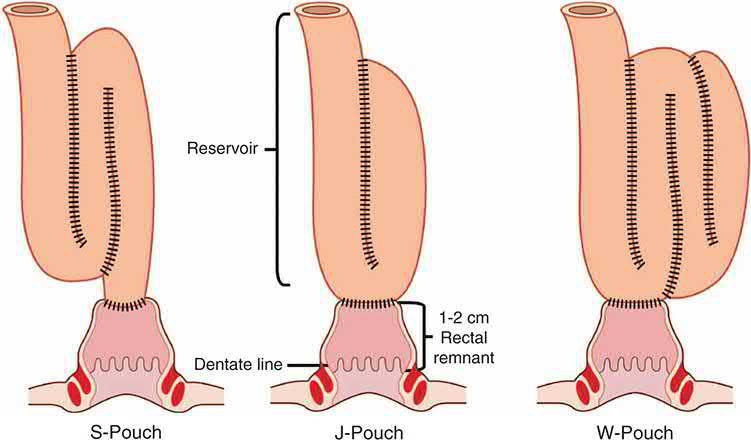
- Panproctocolectomy and permanent end-ileostomy: removes all disease and cancer risk; indicated when restorative surgery is unsuitable because of poor sphincter function, comorbidity, or patient preference [1].
- Subtotal colectomy and ileorectal anastomosis: an option avoiding pelvic surgery, requiring ongoing rectal surveillance [1].
- Segmental colectomy is not recommended for ulcerative colitis, because of a high recurrence rate in the remaining colon [1].
- NICE treats preoperative information as a named responsibility of specific professionals, not a general duty.
- A specialist such as a gastroenterologist or nurse specialist must give information about all available treatment options, including the benefits and risks of each and the potential consequences of no treatment, and the person must have sufficient time and opportunities to think about the options [2]. A colorectal surgeon must give specific information about what to expect in the short and long term after surgery [2].
- A specialist (colorectal surgeon, gastroenterologist, IBD nurse specialist or stoma nurse) must cover diet, sensitive topics such as sexual function, effects on lifestyle, psychological wellbeing, and the type of surgery, the possibility of needing a stoma and stoma care [2].
- A specialist knowledgeable about stomas must give specific information about siting, care and management of stomas [2].
After surgery, a stoma-knowledgeable specialist must give information about managing the effects on bowel function, specific to whether an ileostomy or an ileoanal pouch was formed, covering strategies for the physical, psychological and social impact, where to go for help if symptoms occur, and sources of support and advice [2]. These principles apply to elective surgery and can also be applied to people requiring emergency surgery [2].
Choice of operation in Schwartz's account
- In fulminant colitis or toxic megacolon, total abdominal colectomy with end ileostomy, with or without a mucous fistula, is recommended over proctocolectomy: most patients improve dramatically despite the diseased rectum, the difficult pelvic dissection is avoided in a critically ill patient, a loop ileostomy with decompressing colostomy is reserved for those too unstable for colectomy, pouch reconstruction is generally contraindicated emergently, and only massive haemorrhage including the rectum forces proctectomy with permanent ileostomy or pouch [4].
- Electively, because of ongoing inflammation, cancer risk and the availability of restorative proctocolectomy, most surgeons recommend removing the rectum: total proctocolectomy with end ileostomy is the historical gold standard and most patients function well after it, the continent Kock pouch was devised to improve on it but carries significant morbidity, restorative proctocolectomy with ileal pouch–anal anastomosis has been the procedure of choice since its introduction in 1980 for patients wishing to avoid a permanent stoma, and abdominal colectomy with ileorectal anastomosis may suit indeterminate colitis with rectal sparing [4].
- For indeterminate colitis in a patient wanting sphincter preservation, total abdominal colectomy with end ileostomy is the best first step so that pathology of the whole colon can refine the diagnosis; a pouch follows if the picture is ulcerative colitis, completion proctectomy with end ileostomy is safest if it remains in doubt, and a pouch may still be considered with a 15–20% failure rate [4].
- Crohn's colitis presenting as fulminant colitis or toxic megacolon is treated identically, with elective proctectomy for refractory proctitis or ileorectal anastomosis if the rectum is spared; segmental colectomy suits segmental disease or an isolated stricture with a normal remaining colon and rectum, Crohn's pancolitis carries nearly the same cancer risk as ulcerative colitis so annual surveillance after 7 years is recommended and dysplasia mandates proctocolectomy, and pouch reconstruction is not recommended in Crohn's because of pouch Crohn's disease, fistula, abscess, stricture, dysfunction and failure [4].
Complications
- Toxic megacolon and colonic perforation (mortality around 40%) are the most serious acute complications; severe haemorrhage is uncommon (1–2%) but may need urgent surgery [1].
- Postoperative pouch complications include pelvic sepsis and anastomotic leak, stenosis, pouchitis (inflammation causing pain, frequency and bleeding, treated with antibiotics, steroids or probiotics) and poor function of an anterior-resection-type syndrome [1][5]. Pouchitis affects 30–55% of ileoanal pouch patients over time, presenting with diarrhoea, haematochezia, pain, fever and malaise; the differential includes infection and undiagnosed Crohn's disease [9].
- Long-standing pancolitis carries an increased risk of colorectal cancer, rising with disease duration [1].
Prognosis
- Ulcerative colitis follows a chronic relapsing-remitting course; early relapse and persistent disease within the first two years predict a more severe course [1].
- Intensive medical treatment of acute severe colitis achieves remission in around 70% of episodes, with the remainder requiring urgent surgery [1].
- The overall lifetime risk of colectomy in ulcerative colitis is approximately 20% [1].
References
- Bailey & Love's Short Practice of Surgery, 28th ed., Ch. 75 Inflammatory bowel disease
- NICE Guideline NG130: Ulcerative colitis — management (2019), 1.2.1; 1.2.2; 1.2.3; 1.2.4; 1.2.5; 1.2.6; 1.2.7; 1.2.8; 1.2.9; 1.2.10; 1.2.11; 1.2.12; 1.2.13; 1.2.14; 1.2.21; 1.2.22; 1.2.23; 1.2.24; 1.2.25; 1.2.26; 1.2.27; 1.3; 1.3.1; 1.3.2; 1.3.3; 1.3.4; 1.3.5; 1.3.6; 1.4.1; 1.4.2; 1.4.4; 1.4.5 www.nice.org.uk
- Sabiston Textbook of Surgery, 22nd ed., Ch. 95 Colon and Rectum
- Schwartz's Principles of Surgery, 11th ed., Ch. 29, Colon, Rectum, and Anus
- Oxford Handbook of Clinical Surgery, 5th ed., Ch. 12 Colorectal surgery
- Maingot's Abdominal Operations, 13th ed., Ch. 46
- Oxford Handbook of Clinical Surgery, 5th ed., Ch. 26 Emergency surgery topics
- NICE Clinical Guideline CG118: Colorectal cancer prevention — colonoscopic surveillance in adults with ulcerative colitis, Crohn's disease or adenomas (2011, last updated 2022), 1.1.1; 1.1.2; 1.1.3; Box 1 www.nice.org.uk
- Schwartz's Principles of Surgery: ABSITE and Board Review, Ch. 29